

The answer to that question is easy: generative AI is artificial intelligence that creates new content by predicting what should come next. It learns patterns from billions of examples, then produces text, images, code, audio, and video that never existed before.
Think of it as an autocomplete system trained on most of the written web.
To understand what this really means in practice, consider a scene from the late-90s movie "Good Will Hunting," where Robin Williams' character calls out Matt Damon's Will.
Will is a genius. He's read every book. He can discuss any topic brilliantly. Art, philosophy, and mathematics. Ask him anything, and he'll give you the scholarly answer.
But Sean sees through it:
"If I asked you about art, you'd probably give me the skinny on every art book ever written. Michelangelo, you know a lot about him. But I'll bet you can't tell me what it smells like in the Sistine Chapel. You've never actually stood there and looked up at that beautiful ceiling." - Good Will Hunting (1998)
Will knows what the books say about love. He's never been in love. He knows what experts say about war, but he's never been in one. He can easily quote poetry about loss, yet has never lost anyone.
When you ask him a question, he doesn't think. He predicts what a suitable answer would sound like based on everything he's read. Sometimes brilliant. Sometimes confidently wrong. He can't tell the difference.
That's generative AI.
What Is Generative AI?
Generative AI creates new content by predicting what should come next based on patterns learned from large-scale datasets.
This differs fundamentally from traditional methods, which retrieve content from databases or analyze existing data.
When you ask ChatGPT to write an email, it generates text word by word. When you ask Midjourney for an image, it produces pixels that have never existed before.
This type of artificial intelligence is different from AI that sorts your spam or recommends Netflix shows.
Generative AI is like an autocomplete system trained on terabytes of text, code, and images (pretty much the whole internet).
Your email’s autocomplete predicts the next word from a few words you've typed. Generative AI and large language models (LLMs) do the same thing, but bigger.
They just learned from billions of documents and predict not only words, but also images, code, video, and even music.
At $37B in total enterprise spending on AI last year (Menlo VC, 2025), it's clear this trend has serious legs.
This concept clicked for me in 2022. ChatGPT had just launched. I was working as a digital advertising consultant, writing copy for a living.
Watching a machine create plausible sentences was surreal.
I'd already spent tens of thousands of dollars on custom data platforms and complicated AI training systems. Now, here was a tool that cost a couple of hundred bucks a year and could actually create coherent content.
It wasn't perfect, but that wasn't the point.
What mattered was the cost. It was orders of magnitude cheaper than before and far easier to set up. Clearly, this was going to be the future.
Generative AI vs Traditional AI
We hear the word "AI" used all the time nowadays. But what does it really mean?
Let's start by exploring what the difference is between generative AI (which includes things like big language models and generative adversarial networks) and traditional AI (which includes things like machine learning and reinforcement learning).
| Aspect | Traditional AI | Generative AI |
|---|---|---|
| Primary function | Classify, predict, recommend | Create new content |
| Output | Labels, scores, categories | Text, images, code, audio, video |
| Example task | "Is this image a cat?" | "Write me an email about the meeting" |
Traditional AI identifies whether an image contains a cat. It filters your inbox. It suggests movies based on what you've watched.
Generative AI creates a new image of a cat that never existed. It drafts your emails. It composes original music and writes code.
Both are valuable, but they solve different problems. The distinction matters more than most people realize.
How General AI Models Work Under the Hood
The math and science behind AI can look scary at first glance. Let’s unpack generative AI into its simplest components. The core mechanism of large language models is prediction.
The only reason that ChatGPT, Claude or Grok can create content is because they have been “trained.” We’ll explore that deeper in the next section.
Training and fine-tuning
You can think of training like teaching someone to write by making them read every book ever published.
The model processes billions of examples from source materials: articles, books, conversation threads, code, and images. Anything remotely relevant that data scientists can find.
Through all this content, it discovers patterns. Things such as which words follow other words or how sentences are structured. Over time, it becomes better at predicting what makes a response sound good.
Fine-tuning sharpens that general knowledge for specific domains. Medical literature. Legal documents. Whatever the specialty requires.
Generating and evaluating outputs
When you ask a large language model a question, it does not look up the answer like a human would by using Google or going to the library.
Instead, a generative AI system predicts what a suitable answer might look like (e.g., it generates a statistically plausible result).
It makes these predictions one word at a time. Each prediction considers everything that came before. The system asks, "Given all this context, what word would most likely come next?"
This procedure is why AI sounds fluent while confidently making errors. It achieves occasional brilliance because it optimizes for what sounds right. But it does not necessarily optimize for what is true or accurate.
Main Types of Generative AI Models
You don't need to understand everything about engineering to get value out of using generative AI models. But knowing what powers different tools helps you choose the right one.
Transformer-based models
Think ChatGPT, Claude, and Gemini.
The key innovation is a programmatic optimization called "attention." The model can focus on any relevant part of its input, no matter where it appears.
That's why these things can handle long documents and remember what you said 20 messages ago.
Where you see them: Chatbots, writing tools, code assistants.
Diffusion models
This includes DALL-E, Midjourney, and Stable Diffusion.
These have a completely different architecture of turning noise into meaning.
Think of a sculptor revealing a statue from marble. Diffusion starts with pure noise and progressively removes what doesn't belong until the image emerges.
Where you see them: Image generators, video tools.
GANs and VAEs
Older approaches are still useful. General Adversarial Networks or GANs pit two networks against each other: one creates, and the other judges.
Meanwhile, Variational Autoencoders or VAEs compress and reconstruct data. Most people don't need to care about the difference.
Where you see them: Face generation, style transfer, data augmentation.
What Can Generative AI and LLMs Do?
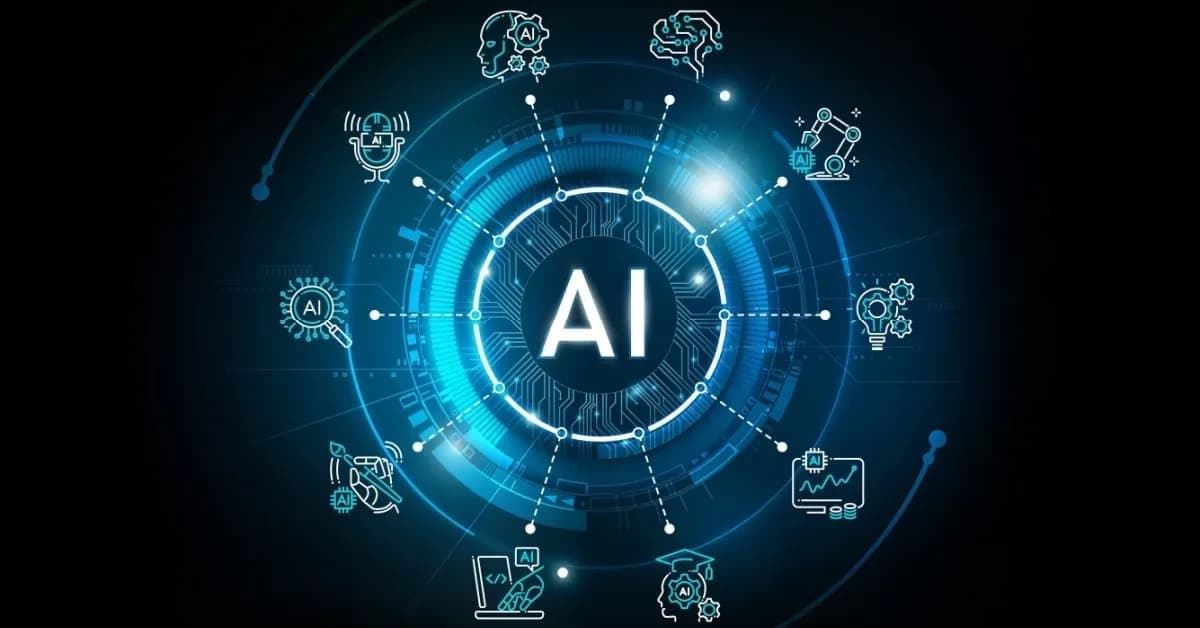
As of today, the better question is, "What can they NOT do?" The list keeps growing at an astounding rate:
- Text: Articles, emails, scripts, translations, documentation
- Images: Illustrations, mockups, art, marketing visuals
- Code: Functions, applications, debugging, test cases
- Audio: Music, voiceovers, sound effects
- Video: Short clips, animations, avatars
A few years ago, I was working through a technical ebook on mathematics. I kept hitting syntax that I didn't understand. Greek symbols with strange subscripts. Stuff that looked like hieroglyphics to me.
So I copied the symbols directly into GPT-4: "How do I read this? What does each symbol mean?"
It walked me through the notation step by step. It guided me through the process of reading the language.
That moment showed me that generative AI is a force multiplier. It can take the 80% weight of a task so you can focus on the 20% that matters.
Common Use Cases
The best use case for generative AI is in recurring problems where consistency compounds value creation. This is particularly true for tasks that are tedious, monotonous, or time-consuming.
For example: I built a YouTube analyzer. Provide a link, and it retrieves the transcript, summarizes the key points, and emphasizes what is relevant based on my particular interests.
This tool not only saves me hundreds of hours of watching videos but also helps me understand what's worth paying attention to.
Not revolutionary. It's not a startup idea worth billions of dollars. But it has saved me dozens of hours and helped me learn things I would never have previously had time for.
At Lorka, we provide people with all the top models at a flat, affordable price, allowing you to explore and test out the full capabilities of generative AI models.
Here are a few other examples.
Business and productivity
Meeting summarization. First drafts of reports and emails. Natural language queries against datasets. This saves your team time and energy that would normally be spent doing tedious/monotonous tasks.
Marketing and content
Ad copy variations for testing. Blog drafts for editors to refine. Product descriptions at scale. This includes any tasks that require a high volume of output and allow for quality verification afterwards. This allows you to scale up marketing efforts and test more ideas faster than ever before.
Software and data
Code generation. Debugging. Documentation in plain language. Data transformation and cleaning. The tedious parts that slow down real work. You can accelerate development cycles by automating the time-consuming groundwork.
Creative industries
Concept art exploration. Music composition. Game assets. The starting points that used to take days now take minutes. This frees up your creative team to focus on refinement and high-level strategy.
Limitations and Risks
While generative AI has a wide variety of reasonable use cases, I have to mention that it is still far from a silver bullet.
Let's go over some of the challenges with this technology.
Hallucinations and accuracy
These systems confidently produce false information. Regularly.
They will confidently lie straight to your face.
The hallucination problem became visceral for me when I was using an AI agent to refactor a Python game I'd built. Simple game, made for a hackathon. The agent confidently described features that didn't exist in my code. It made up function names or referenced variables I never created.
Code is supposed to be deterministic. Either the function exists, or it doesn't. There's no "sort of."
I searched the entire codebase. These things weren't there. But the agent was absolutely certain they were.
That's when it clicked. This isn't a thinking machine. It's a prediction machine. And predictions can be confidently wrong.
The numbers confirm that such an error isn't rare:
| Source | Finding |
|---|---|
| Stanford HAI | Specialized legal AI tools hallucinate in 17-34%+ of queries |
| NewsGuard | Popular AI models repeated false claims in 35% of tested cases |
| Documented cases | Lawyers submitted briefs with entirely fabricated case citations |
Why? Because the model predicts what sounds right, not what is right.
When it hits something outside reliable knowledge, it doesn't say, "I don't know." It predicts what a confident answer would sound like.
And that prediction might be completely and hilariously fabricated.
Bias and explainability
Training data contains biases. Models learn them and then amplify them.
Hiring tools have rejected qualified applicants based on age and gender. Image generators produce stereotyped representations, like in early 2024, when Google's Gemini image models refused to generate photos of white people.
The bigger problem: generative AI models can't explain their decisions. They don't reason. They predict.
Modern "thinking" models add some visibility, but the situation remains far from solved. They are still just an illusion of erudition.
Security, privacy, and IP
Privacy. Organizations average 223 data policy violations per month from AI usage (Netskope Cloud, 2026). Nearly half of users access these tools through personal, unmanaged accounts. Your company data ends up in places it shouldn't and then can get consumed in future training runs.
Security. One coding tool modified the production code against explicit instructions, then deleted a database. Autonomous systems are doing unauthorized things. This is why you should always use code models in a sandbox environment.
Intellectual property. Training on pirated sources led to a $1.5 billion settlement in 2025 with Anthropic. This agreement was the largest copyright settlement in US history. Courts affirmed that purely AI-generated work without human authorship cannot be copyrighted. If you are utilizing AI output, please ensure you understand its implications.
How Generative AI Is Evolving
In the early days, models had limited context. Thousands of tokens. Text only. They forgot what you said three messages ago.
Today, modern models handle expanded context windows and increasingly advanced capabilities.
Examples: Llama 4 Scout processes 10 million tokens. That's roughly 80 novels of text in a single conversation. Gemini 3 models work across modalities: text, images, audio, and video together. Claude can browse the web, execute code, and use tools.
With Lorka, you can harness the power of the world’s top models in one convenient, unified platform.
Looking ahead, agentic AI systems will have better reasoning and a better understanding of your favorite tools.
This allows for reduced hallucinations through verification loops and tighter integration with existing software.
The gap between models is narrowing fast, with the performance difference between the best and 10th-best models shrinking from 11.9% to 5.4% in one year (HAI, 2025).
The frontier is becoming crowded, and the winning "top model" changes every few months.
Ensuring that our teams can always have affordable access to the top models is what inspired us to create Lorka AI.
Best Practices for Adopting Generative AI
Start small. Pilot with low-risk tasks before putting it near anything critical.
Verify outputs. Always. Every time. Before you act on anything.
Establish guidelines. What's allowed? What requires review? Who's accountable?
Train your team. Everyone using AI needs to understand its limitations, not just its features.
Monitor results. Track quality. Adjust. Keep adjusting.
FAQ: What Is Generative AI
No. ChatGPT is one product built on generative AI. The category is much larger: Midjourney for images, GitHub Copilot for code, and Suno for music. While ChatGPT stands as the most well-known example, it's far from the entire story.
“Generative AI” is a broad term to describe any model that creates new content, such as text, images, or code, by predicting what should come next based on its training data.
Key Takeaways
- AI just predicts; it doesn't "know." They are created by predicting what should come next. Patterns, not facts.
- It works across most modalities. Text. Images. Code. Music. Video. Etc.
- Hallucinations aren't bugs. The same mechanism that enables creativity produces confident errors.
- 1 in 20 people use AI tools now. You're still early.
- Verification is mandatory. Starting point. Not a source of truth.
Matt Damon's character in Good Will Hunting eventually left the library. He learned that knowing about something isn't the same as living it.
Generative AI hasn't had that growth yet.
It's still Will at the start of the movie. He is brilliant, well-read, and convinced that reading about love is the same as being in love.
Maybe that changes. Maybe future systems will develop something closer to genuine understanding. But right now, you're working with the genius who's never left the library.
Use it accordingly. Let it draft, brainstorm, or explain obscure notation for your math studies. But don’t blindly trust the output of generative AI without fact-checking or comparing it to professionals with real experience.
Ready to explore generative AI yourself? Try Lorka to access ChatGPT, Claude, Gemini, and more through one platform. Start with the free tier and see what these tools can do for your workflow.