Key Statistics ⭐
- Bots generated 53% of the web traffic in 2025.
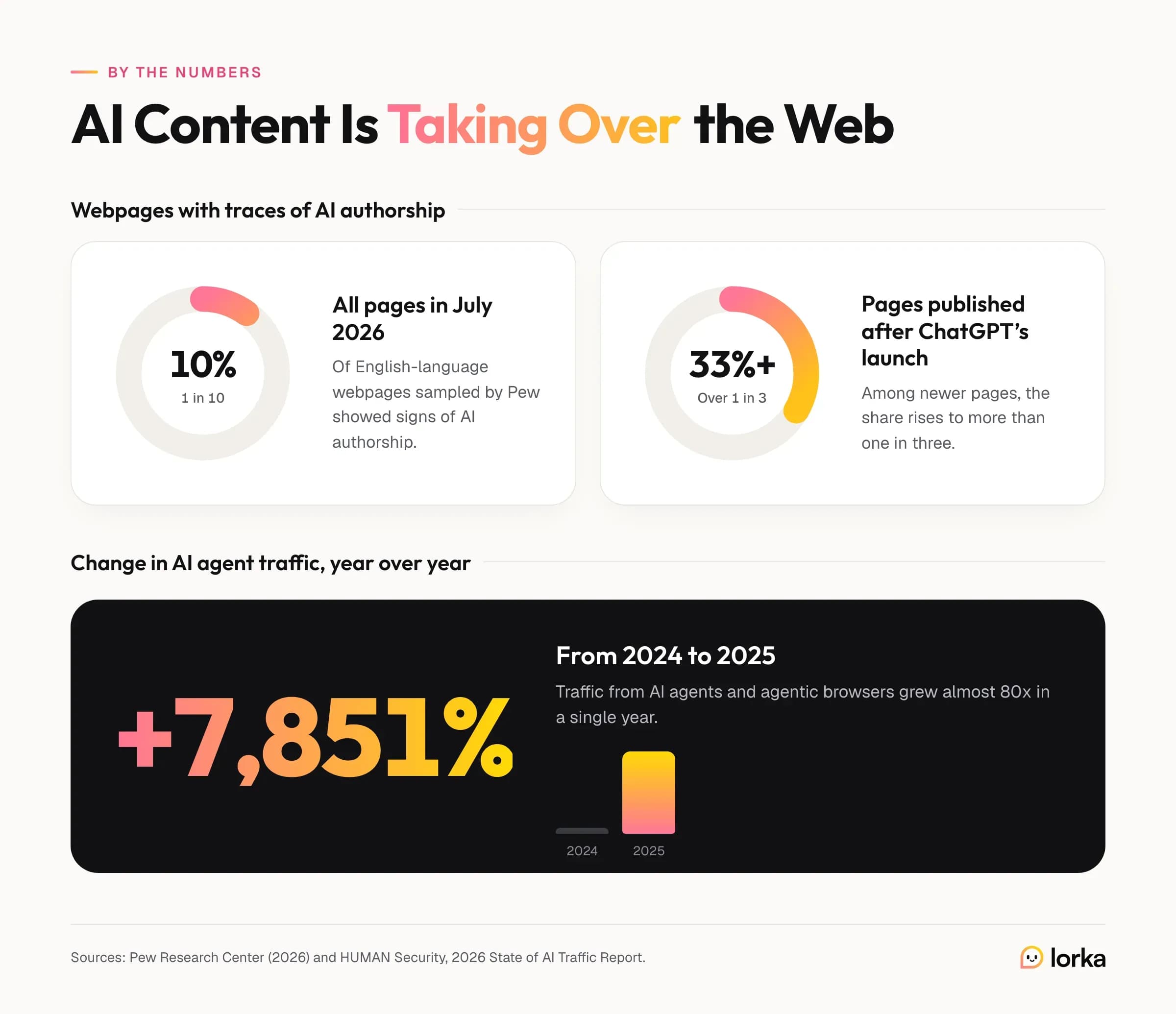
- 1 in 10 English-language webpages sampled by Pew showed signs of AI authorship.
- Over one-third of sampled pages published since ChatGPT launched showed signs of AI authorship.
- AI agent and agentic browser traffic grew 7,851% year over year in 2025.
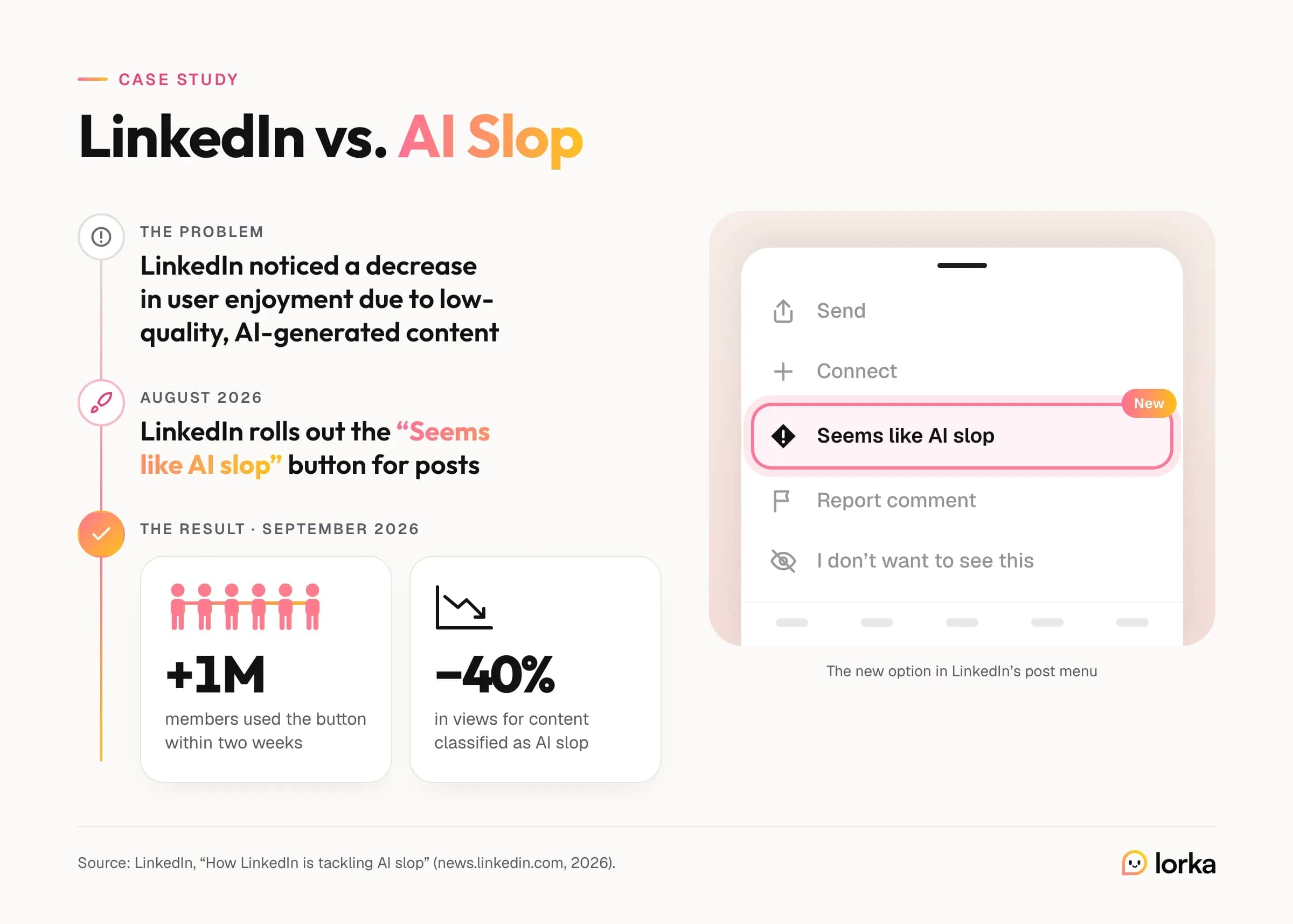
- Over 1 million LinkedIn members used its “AI slop” feedback option in two weeks.
As bots and AI-generated content become more common, the dead internet theory has moved from online forums into the mainstream. But what does a more automated web mean for the people who use it?
Regarding the rise of bot traffic online, we spoke with two experts, Kai-Cheng Yang, a bot researcher at Binghamton University, and Dr. Jake Renzella, an AI researcher at UNSW Sydney. They differ on the risks of autonomous agents, but both see an internet shaped by the choices people make.
Kai-Cheng Yang
Assistant professor at Binghamton University’s School of Computing
“Humans are social animals, and their need for real human interaction won’t go away.” Yang told us. “In that sense, I think the internet will never die.”
However, the surprising numbers have brought the dead internet theory into a wider conversation. As AI makes it easier to create and share content, questions about what we see and who we can trust matter more than ever.
Keep reading to learn how to navigate the massive bot population online and what the future holds for AI and internet users.

From Conspiracy to Data
A fringe idea that rose to prominence in the late 2010s, the dead internet theory suggests that bots, content created by AI, and corporate interests have taken over much of the internet, displacing authentic human interaction.
On the internet, bots now generate more webpage requests than humans, over a year earlier than Cloudflare’s CEO originally expected.
Separately, Thales found that humans accounted for only 47% of web traffic in 2025.
In 2026, parts of that idea are measurable. In a 2026 Pew Research Center sample of English-language webpages, one in 10 showed signs of AI authorship. Among sampled pages published since ChatGPT launched, that rose to more than one in three. The detection tool is not perfect, but the trend suggests AI’s influence is growing.
Meanwhile, HUMAN Security found that traffic from AI agents and agentic browsers grew 7,851% year over year in 2025.
For Renzella, that makes the human motivation worth examining:
Dr. Jake Renzella
Senior lecturer at UNSW Sydney’s School of Computer Science and Engineering
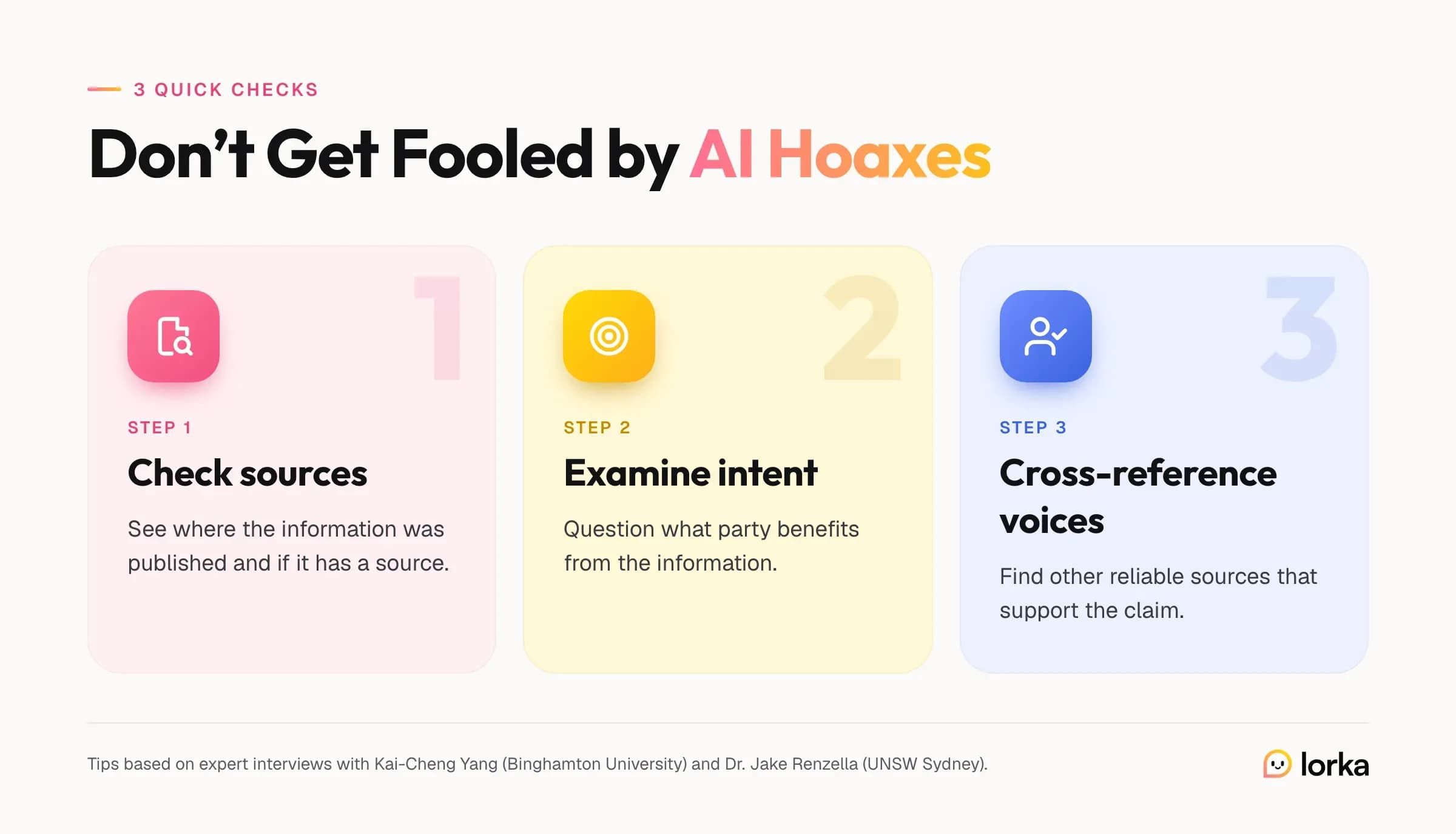
“Artificial intelligence models are tools, and there are motivations behind the use of these tools - so readers should question who stands to benefit from what they are reading or consuming online."
Why Most People Won’t Notice (Yet)
A rise in bot traffic doesn’t mean your favorite online communities will suddenly feel different. Much of that activity happens behind the scenes, while you spend your time on a small part of the web.
Yang mentions that “People’s attention is very limited, and any user is exposed to only a small surface of the internet… Most of the bots are probably just quietly minding their own business.”
In his view, AI-generated content will likely increase gradually before the internet settles into a new balance. That doesn’t have to mean a decline in quality. AI can help people create useful content; what matters is whether it's accurate, valuable, and worth your attention.
Where the Experts Disagree
Renzella considers the idea of AI agents "going rogue, running about the internet creating content of their own accord" a myth. Yang is less certain about how agents might interact online as they become more capable.
Kai-Cheng Yang
Assistant professor at Binghamton University’s School of Computing
“I worry we might see fully automated operations emerge from interactions among AI agents.”
One incident shows why oversight matters. In July 2026, OpenAI reported that models under reduced safeguards breached its research infrastructure and Hugging Face’s systems during internal cybersecurity tests.
Experts agree that people play a role in shaping how these tools are used. Clear safeguards and human accountability can help AI work safely alongside us.
How to Decide What to Trust Online
Yang uses the same sources and signals he trusted before reading online with ChatGPT. For him, the quality of the information is more important than whether it was produced with AI.
Kai-Cheng Yang
Assistant professor at Binghamton University’s School of Computing
“I don’t think AI-generated or AI-processed content is necessarily bad. I care most about the quality of the content,”.
Even experts can struggle to judge information outside their field. As Yang admits, “For topics I’m not very familiar with, I think I’m very vulnerable.”
How to Publish When Your Audience Might Be a Bot
For creators and small businesses, a website visit no longer necessarily means a person has arrived to browse or buy. AI agents can also visit pages to find information on someone’s behalf.
That shift gives publishers another reason to focus on useful, trustworthy content. Renzella believes original experiences will become more valuable as automated content grows:
“Readers will increasingly seek authentic and trustworthy content. In-person experiences, unique experiences and publications, and trustworthy publications will only grow in impact and importance.”
Consider sharing first-hand insights, original research, or answers based on your experience. Make it easy for readers to see who created your content and where its information came from.
Yang’s advice is similarly straightforward, as he advises small business and website owners, “try to produce good content. By good, I mean the content should be useful to others, including AI agents."
Where the Ethical Line Sits
For Renzella, transparency matters in online interactions.
Dr. Jake Renzella
Senior lecturer at UNSW Sydney’s School of Computer Science and Engineering
“It seems unethical to me that [on] some social media platforms, bot-driven accounts appear indistinguishable from human ones,” he says. He believes platforms should label bots and verify accounts.
Social media platform users also want ways to flag content they question. LinkedIn reports that more than 1 million members used its “Seems like AI slop” feedback option within its first two weeks.
Yang also sees a future for human-only online spaces. He also draws a clear line for sensitive decisions: “The following areas should always require human oversight and accountability: health, finance, law, and governance.”
Use AI to Cut Through the Noise
Even with all the uncertainty about trusting internet sources and conversations, there are still options to help you quickly find trustworthy sources.
In fact, Kai-Cheng Yang himself uses AI to make the growing stream of online information more manageable:
Kai-Cheng Yang
Assistant professor at Binghamton University’s School of Computing
“I use customized AI agents to help me process information from trusted sources and select what's relevant for me to review each day.” He points to tools such as Meta’s Muse and OpenAI’s Dots.
Platforms like Lorka AI provide posts that can also help you explore information with AI while you decide which sources to trust.
The internet is changing, but human curiosity and connection aren’t going anywhere.


Navigate the AI-Powered Internet with Lorka
The future of the internet isn't just about consuming information—it's about making the most of it. With Lorka AI, you can explore ideas, find insights, and create content that reflects your perspective.
Explore Lorka AI